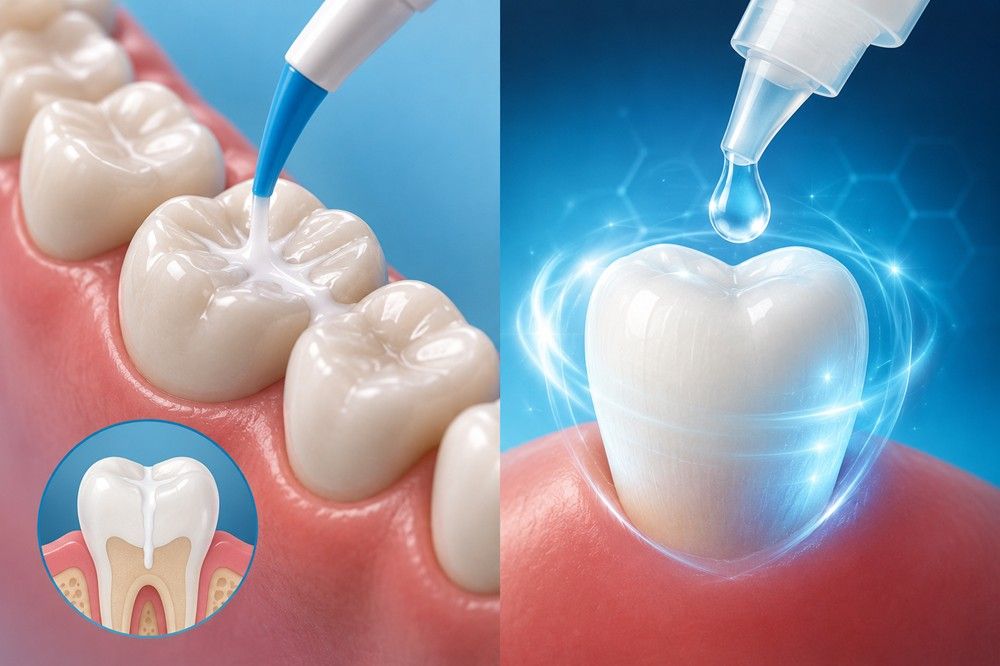
The main difference between dental sealants and fluoride treatment is how they protect your teeth. Dental sealants act as a physical shield by coating the chewing surfaces of the back teeth to keep food out. At the same time, fluoride is a mineral treatment that penetrates the enamel to make it stronger against acid. Both are effective ways to prevent decay, but they work best when used together to cover different areas of the tooth.
Two Paths to a Healthy Smile
Maintaining a bright smile involves more than just brushing and flossing. When looking for dental sealants, many patients wonder which preventive option is right for them. While they both fight cavities, they have very different jobs. Think of a sealant as a raincoat that keeps water off your skin, and fluoride as a vitamin that makes your skin tougher from the inside out.
Exploring the Benefits of Dental Sealants
Sealants are thin, plastic coatings painted onto the chewing surfaces of the molars. These back teeth have deep pits and fissures that are often too narrow for toothbrush bristles to reach. One of the primary benefits of dental sealants is that they “seal out” food particles and bacteria. This physical barrier is incredibly effective for children and teenagers who are still perfecting their brushing habits, but adults can benefit from it as well.
The process of getting dental sealants near you is quick and painless. The tooth is cleaned, a special gel is applied to help the sealant stick, and then the liquid plastic is painted on and hardened with a blue light. There is no drilling or removal of tooth structure involved.
Understanding the Benefits of Fluoride Treatment
While sealants protect the top surfaces of the teeth, fluoride provides a more general defence. One of the key benefits of fluoride treatment is remineralization. This means that if the enamel has been slightly weakened by acid, fluoride helps “rebuild” those soft spots before they turn into actual holes.
Because it is a liquid or varnish applied to all surfaces, it can get between the teeth where sealants cannot go. Using fluoride for teeth protection is a standard part of most professional cleanings. It ensures that the entire tooth—front, back, and sides—remains resistant to the plaque that causes decay.
Comparing Cavity Prevention Methods
When choosing between these cavity prevention methods, it is helpful to see how they stack up side-by-side. Most dental professionals recommend a combination of both for maximum protection.
| Feature | Dental Sealants | Fluoride Treatment |
| Type of Protection | Physical barrier (Shield) | Chemical strengthening (Mineral) |
| Application Area | Grooves of back molars | All tooth surfaces |
| Durability | Can last several years | Needs re-application every 6 months |
| Best For | Preventing “pit and fissure” decay | Overall enamel strength and sensitivity |
Professional Care in the Heart of the City
Whether you are a busy professional or a parent, finding a dentist in downtown Calgary who prioritizes prevention can save you time and discomfort in the long run. Preventive treatments are much more cost-effective than getting fillings or crowns later. By taking a proactive approach, you ensure that your natural teeth stay healthy and strong for a lifetime.
Your Partner in Preventive Health
Taking the step to protect your enamel today is the best way to avoid complex procedures tomorrow. By combining the physical protection of sealants with the strengthening power of fluoride, you give your smile the best possible defence against decay. Having a healthy smile can do wonders for your confidence, and ultimately your overall well-being. We can help you find the right choice.
At Stephen Avenue Dental Choice, our team is willing to provide you with personalized care that suits your lifestyle. We provide an inviting and professional atmosphere where our patients’ comfort and oral health matter. We look forward to helping you maintain a strong, beautiful smile through every stage of life.
Book your preventive care appointment with us today to keep your smile healthy for years to come.
Frequently Asked Questions
Are sealants visible when I smile?
No, sealants are usually clear or white. Because they are only placed on the chewing surfaces of the back teeth, they are not visible to others when you talk or laugh.
Can you get fluoride from water and toothpaste, too?
Yes, most city water and over-the-counter toothpastes contain fluoride. However, the professional-grade fluoride applied during a visit is much more concentrated and stays on the teeth longer for better results.
Do sealants feel weird in the mouth?
For the first few hours, you might feel a slight difference in your bite, similar to how a new filling feels. However, because the coating is very thin, your tongue and teeth quickly adjust, and you won’t notice it at all after a day or two.
Is there an age limit for these treatments?
There is no age limit! While children are the most common candidates because their permanent molars are new, adults with deep grooves or a history of frequent cavities can still benefit from both sealants and fluoride.